Background
As the lead Content Designer for discovery and education across Meta Wearables, I worked horizontally across multiple product teams working on features for Wearables devices and the Meta AI app. That gave me a unique view into how individual features related to each other and how we could present as a cohesive experience rather than a collection of disconnected surfaces.
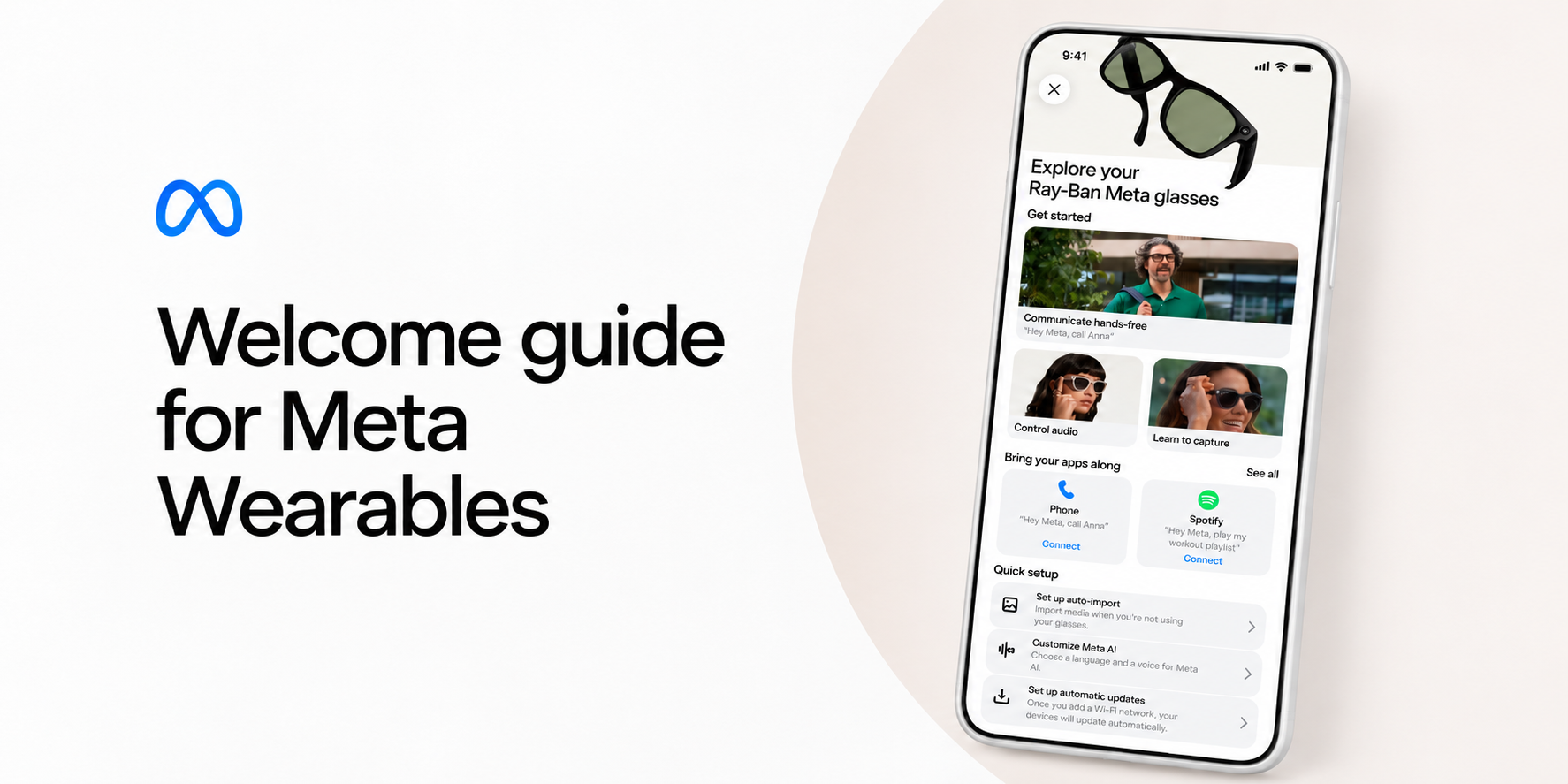
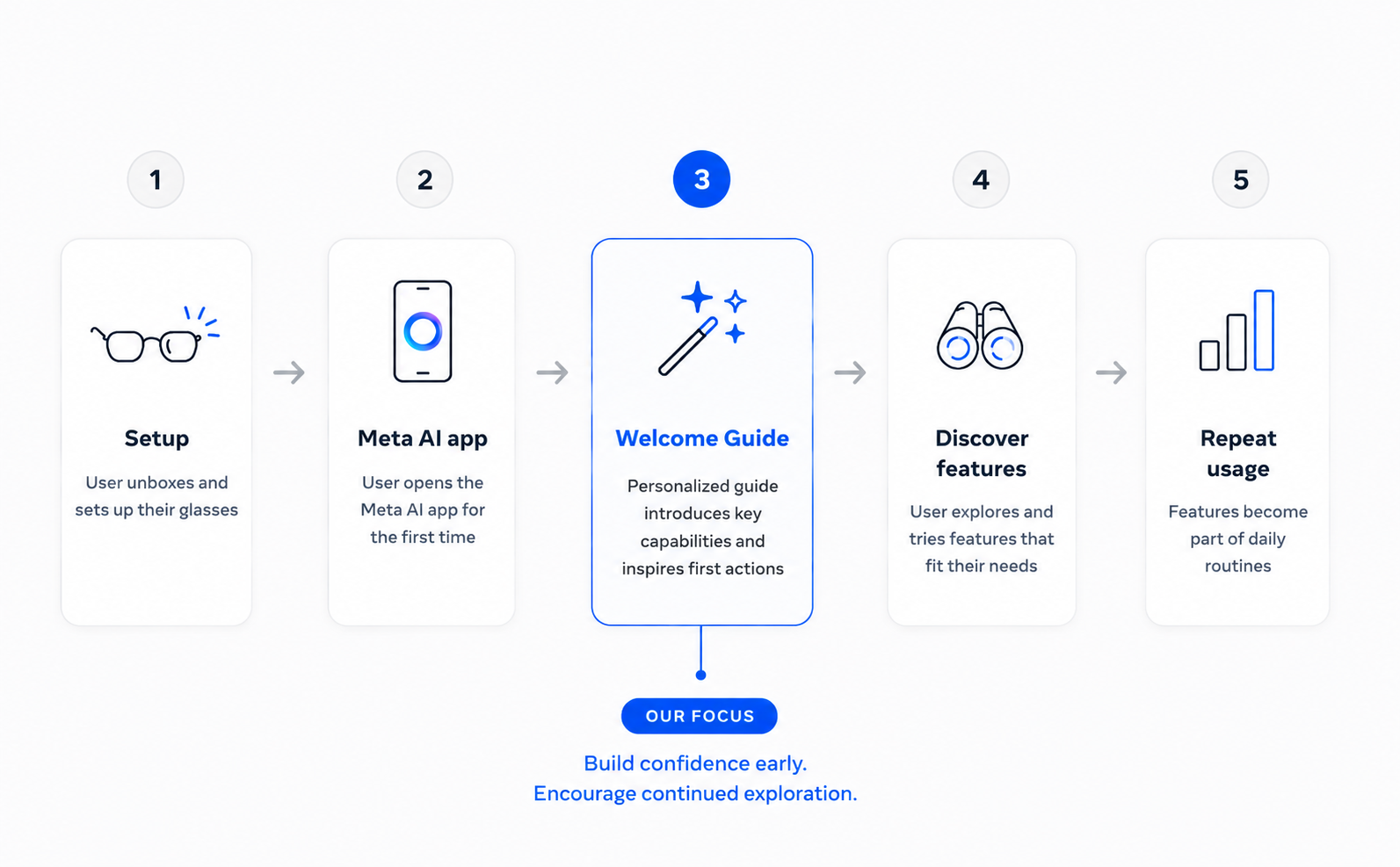
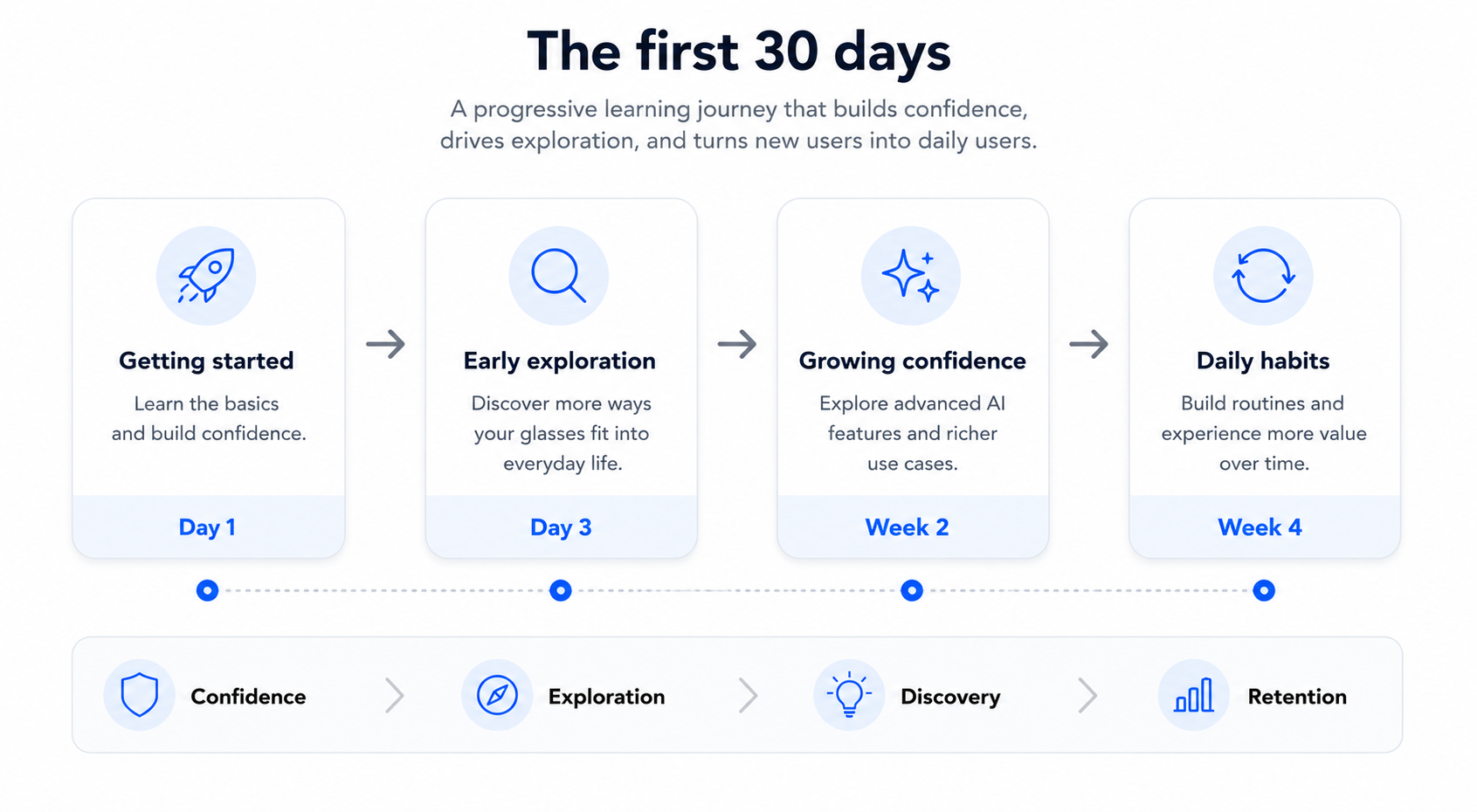
One opportunity stood out: after users finished setting up their glasses, there was no clear path to help them understand everything the device could do. We’d created a sort of “what now?” moment, and we could either leave users on their own at that point or use the opportunity to quickly get them comfortable using and exploring the device. Together with cross-functional partners, I led the strategy and content design for the Welcome Guide, an editorial that appears for the first 30 days after a user sets up a device in the app. Rather than teaching every feature during onboarding, it introduced the right capabilities at the right time, helping people build confidence and get more value from their device.
The challenge
Ray-Ban Meta glasses shipped with an increasingly powerful set of capabilities, but many users weren't discovering the features that made the product valuable over the long term.
Research and behavioral data pointed to a familiar pattern:
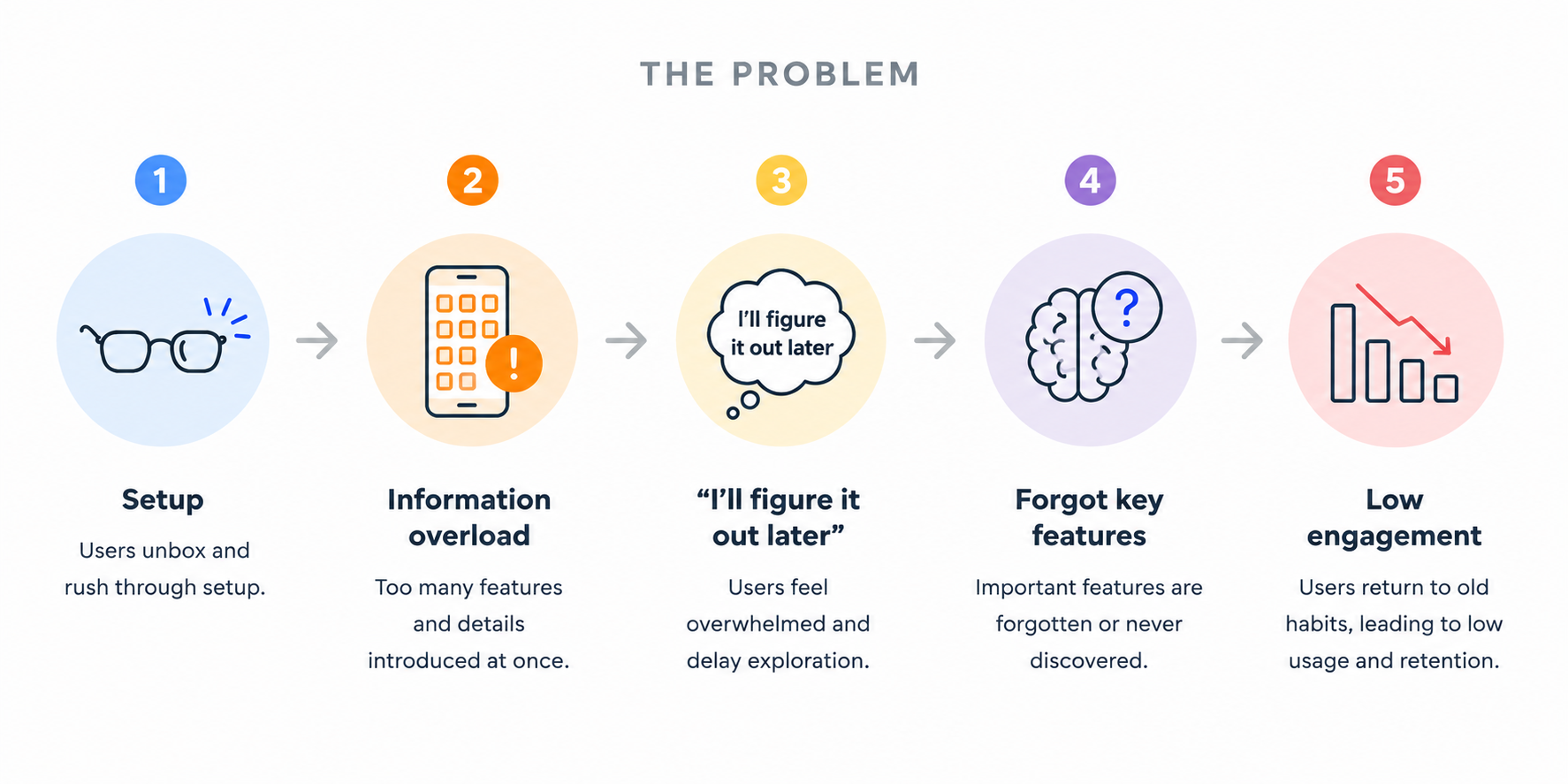
The challenge wasn't simply educating users, it was creating a learning experience that encouraged exploration without overwhelming people on day one.
My role
Responsibilities
Led all aspects of content design
Defined IA principles
Facilitated workshops across Product, Design, Research and PM
Created assets for user research
Partnered on experimentation strategy
Aligned feature teams on priorities, timelines, and production
The insight
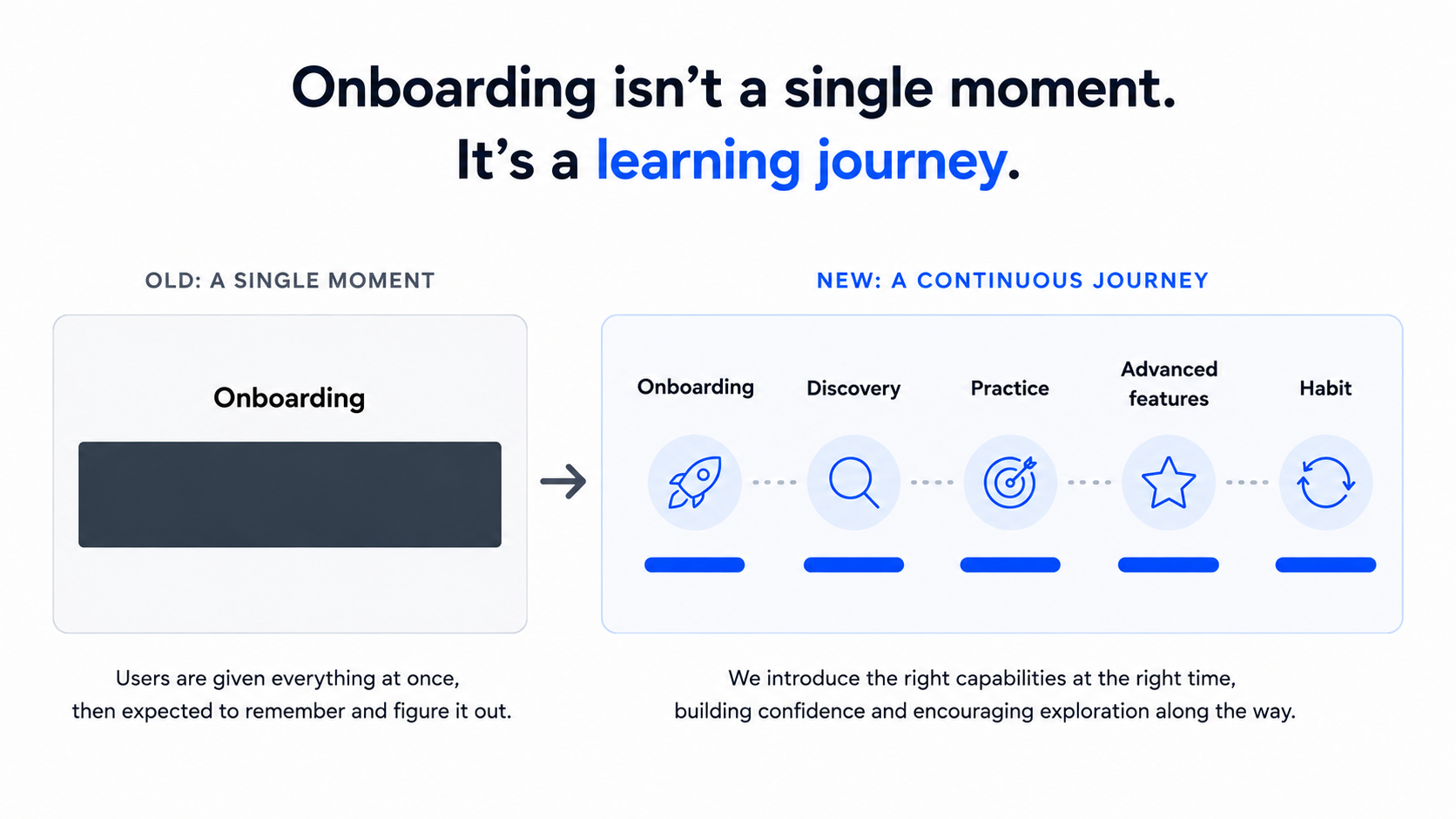
Through user research and in-market feedback, we realized onboarding wasn't a single event—it was the beginning of a learning journey.
Rather than introducing every capability immediately, we could build confidence over time by surfacing the most valuable actions first, then gradually expanding users' understanding as they became more comfortable with the product.
This shift—from onboarding as a checklist to onboarding as an ongoing education experience—became the foundation for the entire system.
Key design decisions
Prioritization
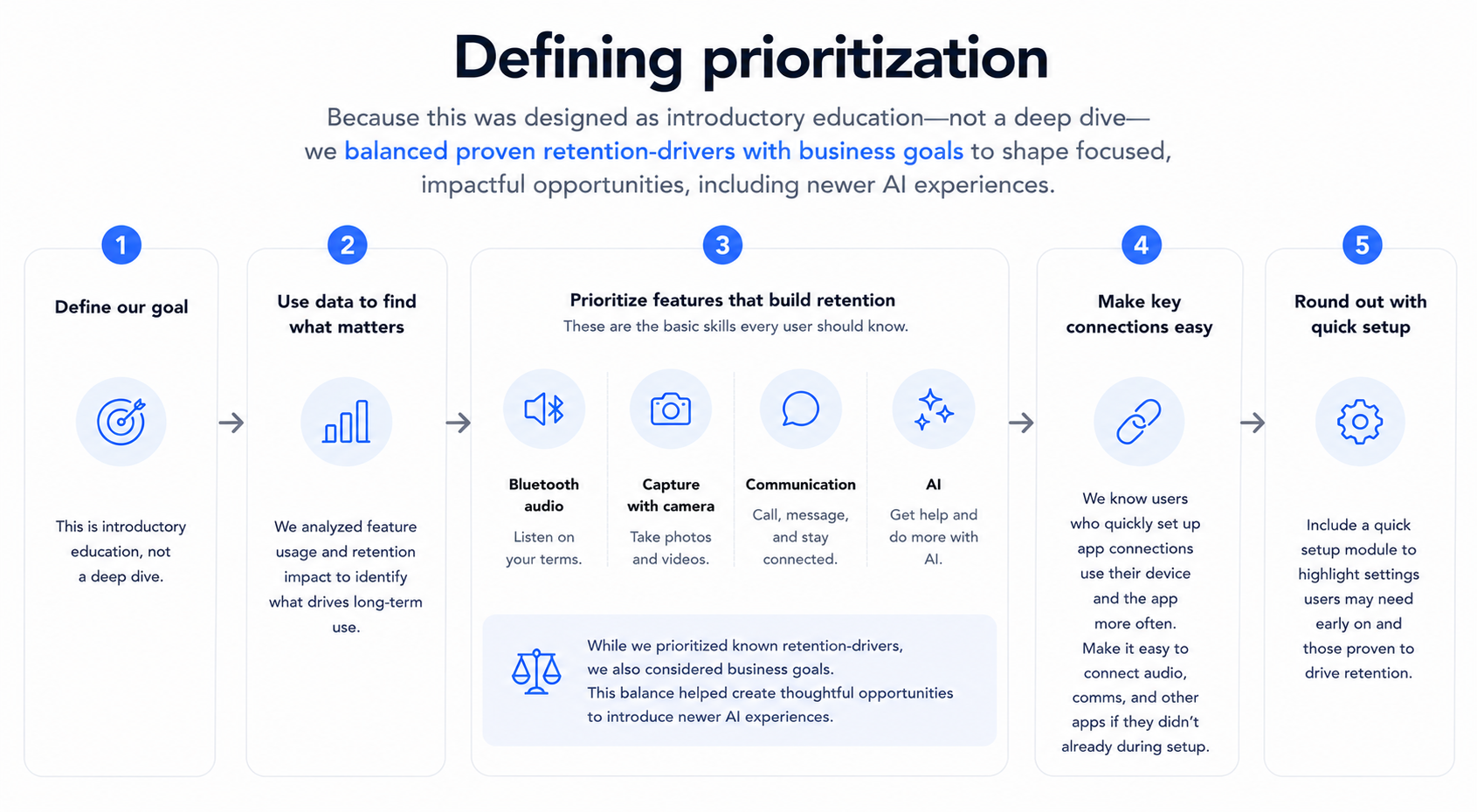
Not every feature deserved equal visibility.
We balanced user value with business goals by highlighting proven retention drivers—such as communication, photo and video capture, and Bluetooth audio—while also creating thoughtful opportunities to introduce newer AI experiences.
Focus on the first 30 days
The guide focused on the critical first month of ownership, when users were deciding whether the glasses fit naturally into their daily lives. Every recommendation was selected to reinforce habits during this period.
Progressive disclosure over information overload
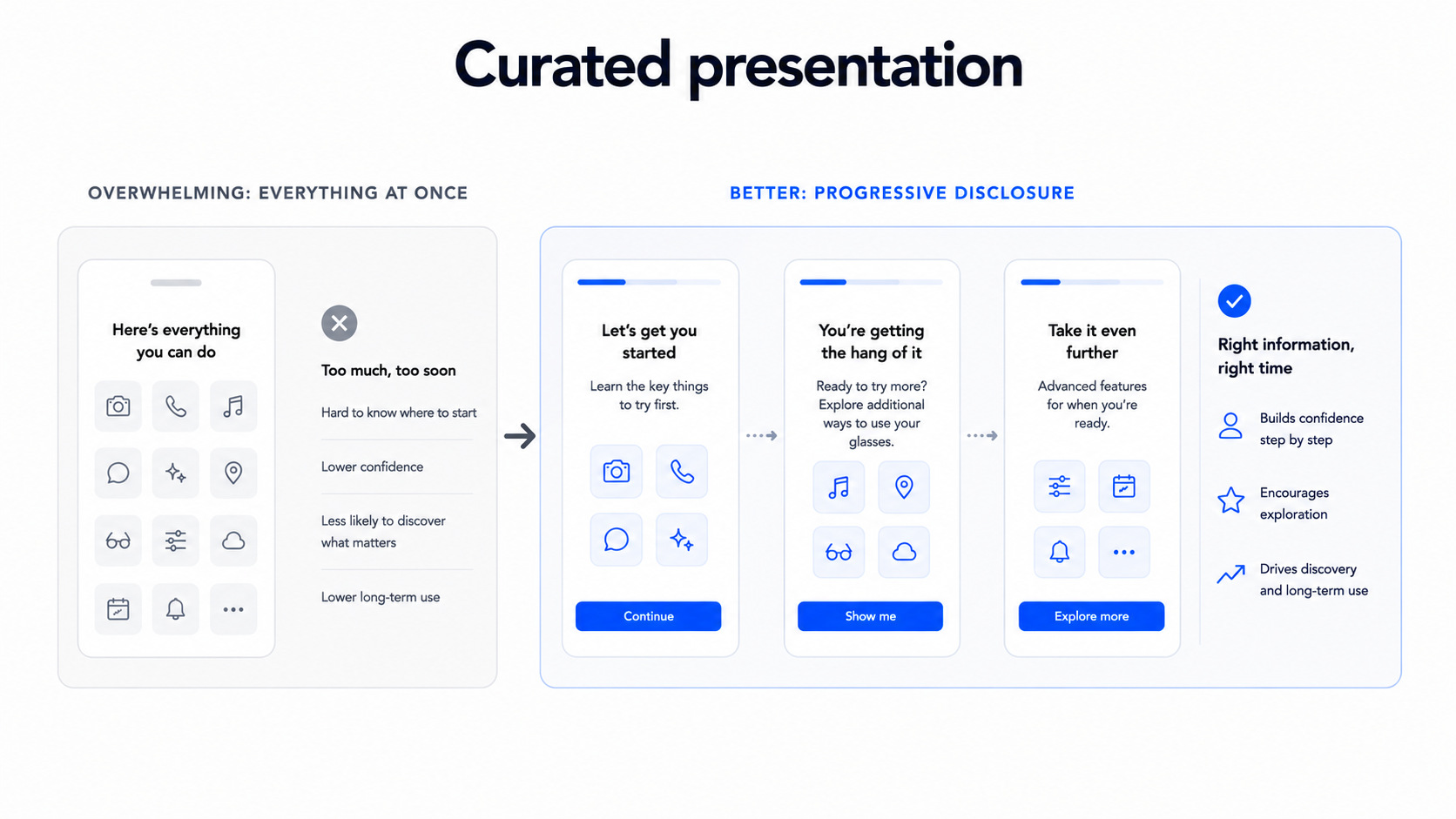
Instead of encouraging users to explore everything at once, the experience introduced key features users could quickly understand and get comfortable with before exploring more advanced features when they’re ready.
Balancing inspiration with instruction
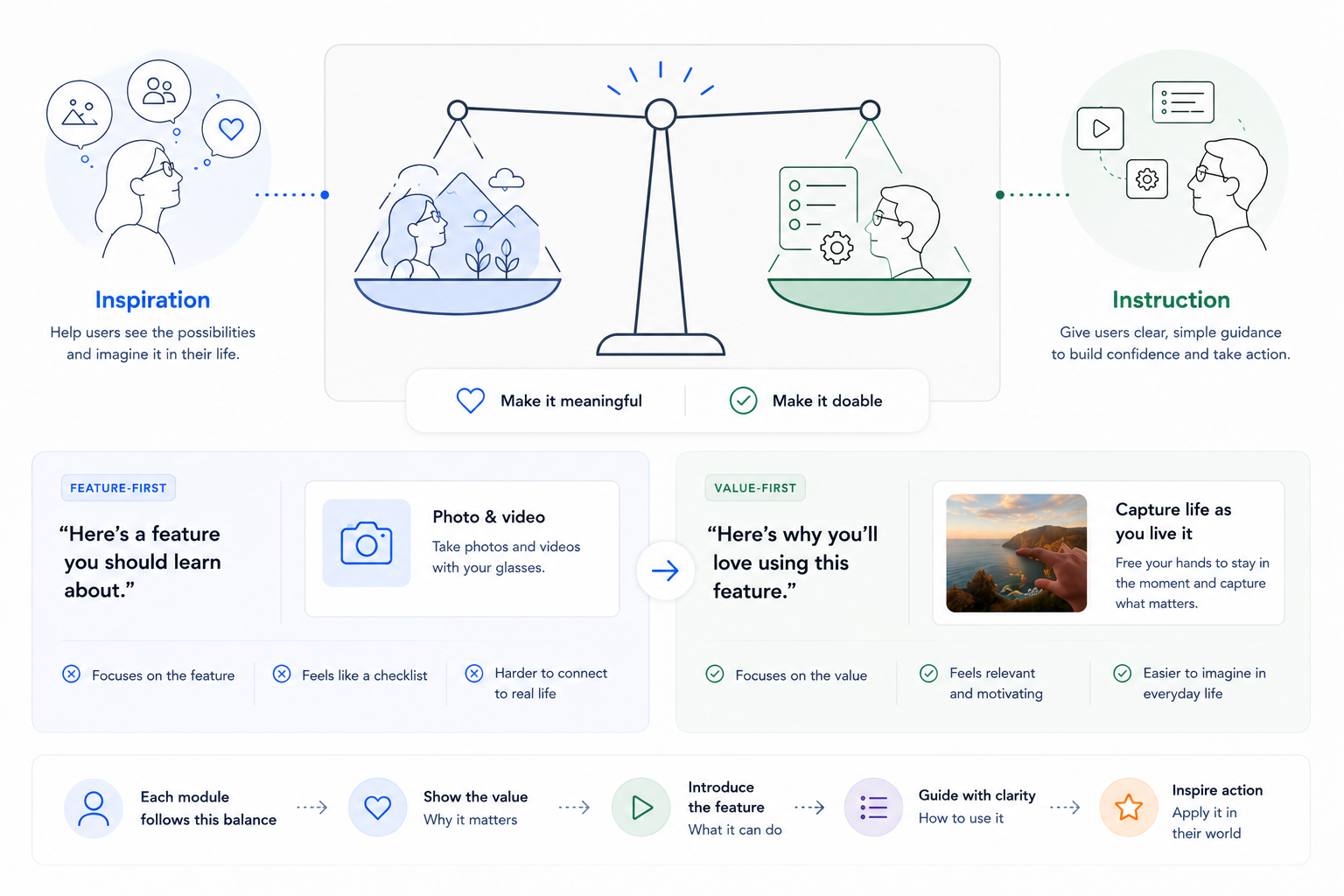
We changed our communication approach from feature-forward (i.e. “here’s this feature you should learn about) to value-forward (i.e. “here’s why you want to use this feature.”) Each module in the guide made real-world value clear, helping users imagine how the glasses could fit into their everyday life, not just how to operate them.
Cross-functional collaboration
Because the experience represented work from many different product teams, success depended as much on alignment as design.
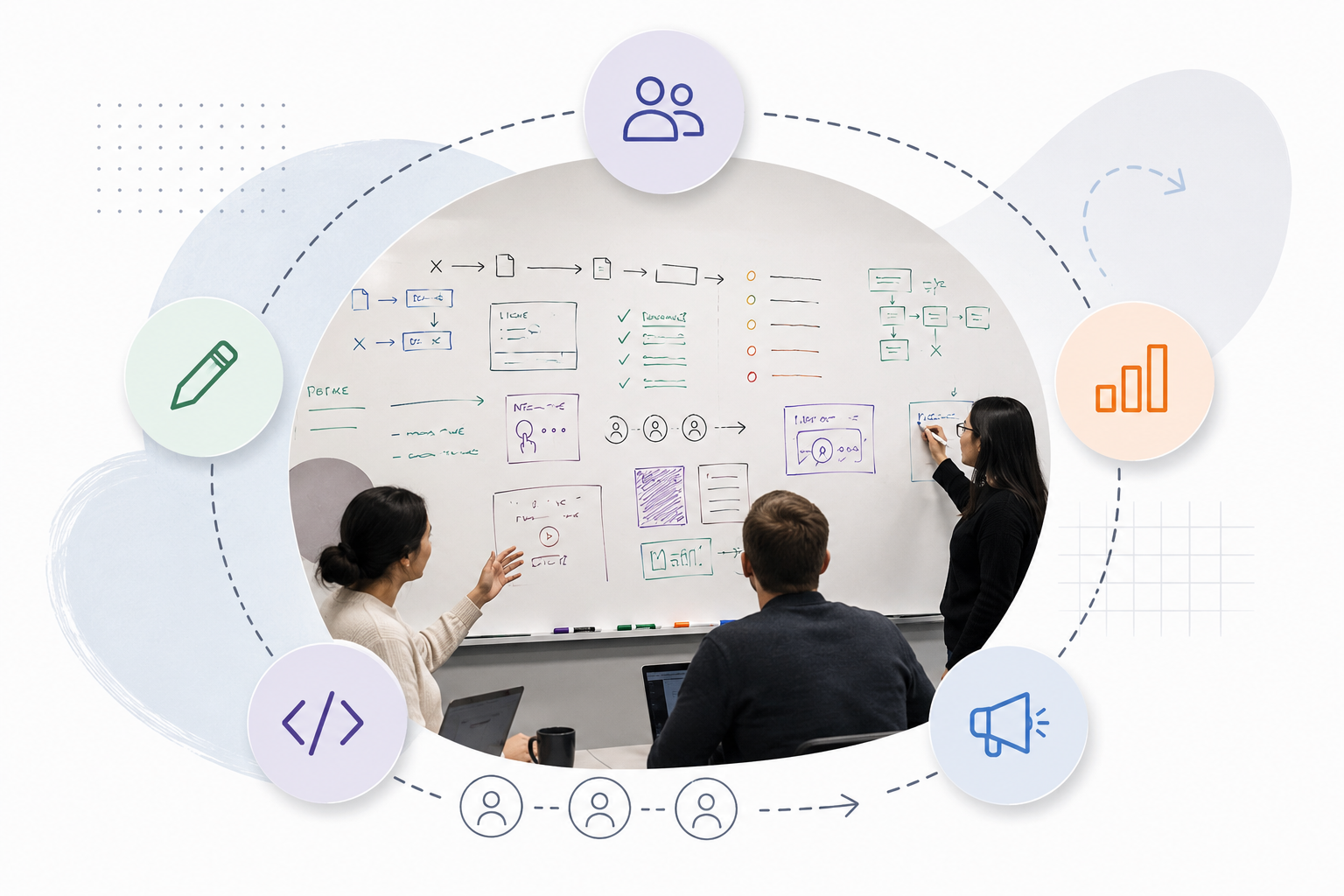
I worked closely with Product, Design, Engineering, Research, and Program Management to:
Negotiate competing priorities and timelines
Challenge assumptions about what users actually needed
Advocate for research-driven decisions
Build consensus around a shared discovery strategy
Coordinate launches across multiple feature teams
Outcome
The experience launched globally with a tailored version for each Wearables device.
Beyond improving the first-time experience, it became an important foundation for future education work by establishing a reusable framework for introducing new capabilities over time.
Impact
Launched globally across multiple devices
Became a primary discovery touchpoint during early product adoption
Established a reusable education framework for future features
Influenced subsequent discovery experiences across the Meta AI app
Received strong qualitative feedback in user research


What I learned
Great onboarding doesn't end after setup.
People learn new technology gradually, through repeated moments of discovery and success. Designing those moments requires balancing user needs, product goals, and organizational priorities just as much as writing clear interface copy.
This project reinforced that some of the highest-impact content design work happens at the systems level—creating frameworks that help teams communicate with users more effectively over time, not just crafting individual screens.